
Make the016.com a preferred choice with Google by clicking here 
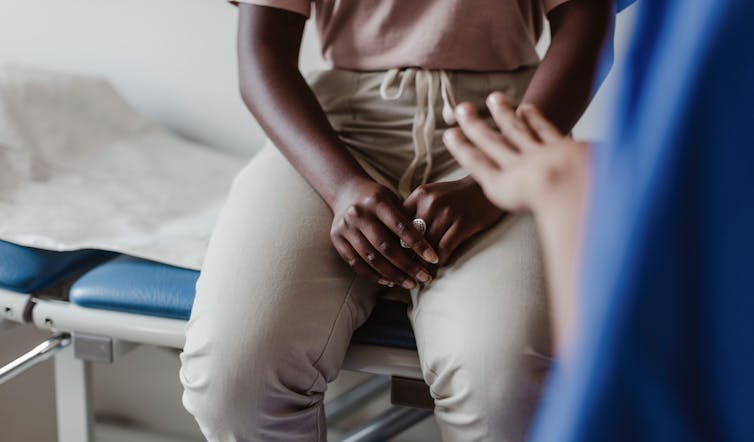
Black patients can be wary of the medical establishment. Maskot via Getty Images
Esther Jones, Clark University
Black Americans have been the least inclined of any racial or ethnic group to say they’d get vaccinated against the coronavirus. The proportion of Black people who said they’ll probably or definitely take the shot has risen over time – but even by mid-January, with two COVID-19 vaccines authorized for emergency use in the U.S., only 35% of Black survey respondents said they’d get it as soon as they could, or already had gotten the shot.
At the same time, the COVID-19 pandemic has disproportionately harmed Black, Indigenous and other people of color in comparison to white members of American society. With Black Americans being hospitalized at rates 2.9 times higher than white Americans and dying from COVID-19 at rates 1.9 times higher, you might assume that Black people would be lining up at breakneck speed to receive the vaccine as soon as it’s available to them.
But the Black community has reasons for distrust – even beyond what might be attributed to the mixed messaging of the nation’s COVID-19 response. And it’s not a simple or sole matter of miseducation. I’m a medical humanist and bioethicist who studies history, ethics and literature to understand racial and gender health disparities. My research explores the history of unethical and abusive treatment Black Americans have experienced at the hands of the medical establishment. Based on past experience, Black people have many legitimate reasons to be in no hurry to get the vaccination.
The American medical establishment has a long history of unethical treatment of Black research subjects. Medical ethicist Harriet A. Washington details some of the most egregious examples in her book “Medical Apartheid.” There’s the now notorious Tuskegee syphilis experiment, in which the government misled Black male patients to believe they were receiving treatment for syphilis when, in fact, they were not. That study went on for a total of 40 years, continuing even after a cure for syphilis was developed in the 1940s.
Perhaps less widely known are the unethical and unjustified experiments J. Marion Sims performed on enslaved women in 1800s U.S. that helped earn him the nickname the “father of modern gynecology.” Sims performed experimental vesicovaginal fistula surgery on enslaved women without anesthesia or even the basic standard of care typical for the time.
Sims experimented on Anarcha, a 17-year-old slave, over 30 times. His decision not to give anesthesia was based on the racist assumption that Black people experience less pain than their white peers – a belief that persists among medical professionals today. Historian Deirdre Cooper Owens elaborates on this case and many other ways Black women’s bodies have been used as guinea pigs in her book “Medical Bondage.”
Cases of medical malfeasance and malevolence have persisted, even after the establishment of the Nuremburg code, a set of medical ethical principles developed after World War II and subsequent trials for crimes against humanity.

A great-granddaughter of Henrietta Lacks poses with her portrait. The HeLa cell line used in medical research originated with a tissue sample from Lacks. Katherine Frey/The Washington Post via Getty Images
In 1951, doctors harvested cervical cancer cells from a Black woman named Henrietta Lacks without her permission. Researchers went on to use them to create the first immortal cell culture and subjected her descendants to ongoing study for years without informed consent. Investigative journalist Rebecca Skloot details the cascade of ethical violations in her book “The Immortal Life of Henrietta Lacks.” Despite heightened awareness after the book’s publication, the ethical violations continued when a group of scientists mapped the HeLa genome without her family’s knowledge or consent.
Advances in genomics are still being used to resuscitate theories of racial “science.” For example, a now-debunked 2007 study purported to isolate a so-called “warrior gene” in Maori Indigenous men and argued they are genetically “hard-wired” for violence. Scientists and news outlets in the U.S. jumped on board, suggesting there’s a genetic predisposition for Black and Latino males to engage in gang activity.
Legal scholar Dorothy E. Roberts explains in her book “Fatal Invention” how incidents like this one perpetuate the harm of race-based science. Using biological data and flawed reasoning tainted by racial stereotyping reinforces racist beliefs about Black people. Such logic focuses on purely biological factors and ignores the social and systemic factors that produce negative and inequitable health outcomes.
While there is now an ample body of scholarly research that reveals these truths about racism in the medical establishment, Black Americans need only to gather around the kitchen table with a few friends and family to share and hear personally experienced stories of medical malfeasance.
Even though their experiences at the hands of researchers like J. Marion Sims were central to advances in modern gynecology, today Black women have not benefited from these advances to the same degree as white women. Black women still suffer worse outcomes and more deaths from gynecologic cancers and have worse health and more deaths affiliated with childbearing, just to name two.

Maternal health and mortality statistics are worse for Black women than their white counterparts. Jose Luis Pelaez Inc/DigitalVision via Getty Images
When tennis star Serena Williams gave birth, she saw firsthand how Black women are disbelieved by the medical establishment. She might have died from postpartum blood clots if she hadn’t advocated for herself in the face of dismissive medical professionals.
[Get our best science, health and technology stories. Sign up for The Conversation’s science newsletter.]
Black people are acutely aware of this history of racism in the medical establishment, and the ways it persists today on both an individual and a collective level. Stereotypes about Black patients, whether the result of explicit or implicit bias, continue to affect the care they receive and their medical outcomes. Again and again, when surveyed, Black Americans report that medical providers don’t believe them, won’t prescribe necessary treatments, including pain medication, and blame them for their health problems.
And the association between racism and increased disease cases and deaths has held true during the COVID-19 pandemic.
Ongoing trust issues around the COVID-19 vaccines are just the latest indication of racial health disparities in the U.S.
Still, there are ways to begin to close the COVID-19 racial health and mortality gap. Vaccinations for Black people may otherwise continue to lag in proportion to population size.
An important first step is for health care workers and policymakers to learn these painful histories and develop strategies informed by an understanding of the systemic racism Black Americans face.
Esther Jones, Associate Professor of English, affiliate with Africana Studies and Women's & Gender Studies, Clark University
This article is republished from The Conversation under a Creative Commons license. Read the original article.
In The News
>WEATHER: Mark Rosenthal's 7-day forecast (:34). High of 70 today in Worcester
-Mass. could see warmer, wetter winter, National Weather Service says
>TOP OF THE NEWS
+Noon: How Worcester residents can sign up for 2027 health plans
+Noon: Gov. Healey sets 60% school breakfast goal; Worcester schools averaged 37.6%
+Noon: Early voting update: Nearly 10,000 ballots cast so far in Worcester
+Noon: Worcester man's Halloween display raises money for charity (2:57)
-Asbestos discovery closes Worcester Head Start facility
-Kelley Square and Mill Street were redesigned. Are they safer today?
-Worcester Human Rights Commission to review police policies, homeless encampment proposal
-Where is Aaron Pennington? Fugitive search enters third year (2:22)
-Max German of Shrewsbury a finalist in "Voice of Logan" contest
-Westborough police chief on leave following an incident in Shrewsbury (:20). Article
-Parents recall Uxbridge Officer LaPorta as community honors him
-Earlier: D.A.: Investigation into death of Uxbridge officer results in no charges
-Worcester County Wonders: The Phantom of the Palladium
-In historic company: Women of Worcester's past, present honored in new mural
-College closures derail students’ plans, leaving some unsure when they’ll return
>DINING OUT: Avvio Ristorante wins early buzz with home-made pasta and tasty pizzas
-Large audience, low price: Give your restaurant's social media a boost on The 016
-Phantom Gourmet visits Worcester restaurant (5:02)
-ICYMI: Anna Maria weighs giving interested buyers more time after auction cancellation
-Worcester Homeowner Summit set for November 7th at DCU Center
-Worcester police, D.E.A. find fentanyl in Clover Street raid
-Worcester police seize 38 guns, ghost gun frames
-See the rest of the day's Worcester news
>HOLDEN: This week's road closures and traffic delays
-Wachusett Teacher Spotlight: Brian Lux
>THE BURBS (brought to you by North End Motor Sales): Community Advocate Hometown Helper: Bernice Gero, animal advocate
-Warrant issued for man who broke into ex-girlfriend’s home in Barre while she was asleep
-Coolidge Elementary School's hidden staircase evokes Shrewsbury memories from decades past
-Meadows Montessori excited to open in Westborough
-New warehouse plans before Westborough Planning Board
-New Northborough fire chief says he has felt "truly welcomed" by town officials, community
>BARS & BANDS: The Mayor's Live Music List for Monday
>SHOWTIME: Gateway Players in Southbridge to hold auditions for "The Lifespan of a Fact"
-Dudley's first poetry slam brings community to the Fun Zone Playground wooded stage
-100 FM The Pike (20:41): Ken Casey from Dropkick Murphys on music as a force for change
>OPINION: Tommy Dorfman: Ticket prices are out of control. Gov. Healey’s bill will make them worse
-WCCA-TV's Chandler Chat No. 510 (28:21): City clerks & state election
-Radio Worcester's The Rundown reacts to W.P.D. internal investigation in Toomey case (24:59)
>OBITUARIES: Tribute to Worcester native who was a lauded poet
>SPORTS: NESN and NESN+ to broadcast select Holy Cross contests
-Railers lose to Maine, 3-1
-Radio Worcester (15:13): Worcester Railers celebrate 1,000 wins for city hockey
>NATIONAL: Christa Pike's executioners given ominous warning before botched lethal injection: court docs
-Devastated mom recalls horror of toddler being pronounced dead, before he's discovered alive in morgue
-Tragic: Nurse dies after shrimp allergy during honeymoon
>NEW ENGLAND: Sandra Birchmore's therapist back on the stand Monday (:59)
-Woman charged with manslaughter in 4-year-old daughter's fentanyl death (:22)
-Over 130 residents evacuated from Lexington nursing home (2:25)
>POLITICS: What does the Governor's Council do? Worcester candidates weigh in
-What is Mass. ballot Question 7? (8:52)
-Full debate on Mass. ballot Question 7 (29:03)
>COLLEGES: Clark campus conversation, McGovern visit examine America’s past and present
>TRAVEL (brought to you by Fuller RV & Rental): Airbnb making changes to guest cleaning requirements (1:39)
>BUSINESS: Central Mass. business by the numbers
-U.S credit card debt is on the rise. Here's how to keep yourself out of credit card debt
-Small businesses need to leverage home field advantage with S.E.O.
>SHOPPING: How inflation is hitting all parts of Halloween celebration (1:59)
>HOMES: The surprising places to never charge your phone, safety experts say
>HEALTH: "Circadian" depression may be the reason why you can't sleep
-How walking regularly can protect your brain for years to come (6:18)
>FOOD: Ina Garten reveals unique ingredient she uses in eggs
>TV/STREAMING: Trailer for "Lupin: Part 4" on Netflix (2:30)
>MOVIES: The craziest horror villains compilation (42:09)
>CELEBRITY: "Office Space" star Richard Riehle dies at 78
-Kurt Cobain's death investigation takes new turn over cop's shocking claim casting doubt on suicide
>ANIMALS: Hound gets caught breaking all her friends out of daycare (1:54)
>HISTORY: The Old Yarmouth Inn on the Cape is still going strong after 330 years
>GOOD NEWS: Veteran sees brother face-to-face for first time in 40 years
-Meanwhile, in England, escaped emu wins wrestling match in middle of road
Latest obituaries | | Sunday's Highlights | | Today's horoscope | | Local Sports
Classifieds
>HELP WANTED
+Servers, West Boylston restaurant
-Prep cook and waitstaff, Shrewsbury Street bistro
-Full-time police officer, West Boylston Police Department
-Bartenders, Worcester Restaurant Group
See all Help Wanteds | | Job opening? Post it here for FREE today
Quick Links: Personalize your news | | Browse members | | Advertise | | Blogs | | Invite friends | | Videos
Animals | | Boston Sports | | Business | | Cars | | Celebrity | | Colleges | | Commute & Travel | | Crime | | Faith | | Food | | Good News | | Health | | Help Wanted | History | | Homes | | Local Sports | | Lottery | | Movies | | National | | New England | | Politics | | Shopping & Deals | | SHOWTIME! | | TV & Streaming | | Weather

