
Make the016.com a preferred choice with Google by clicking here 

People around the world mourned loved ones on International Overdose Awareness Day on Aug. 31, 2021. NurPhoto/Getty Images
Emily B. Campbell, College of the Holy Cross
The highly contentious Purdue Pharma settlement announced Sept. 1, 2021, comes at a pivotal time for the U.S. overdose crisis: 2020 was the worst year on record, with over 93,000 Americans losing their lives to fatal drug overdose. The drug overdose epidemic, now more than two decades long, has claimed the lives of more than 840,000 people since 1999. Current estimates suggest that some 2.3 million people in the U.S. use heroin and 1.7 million people use pharmaceutical opioids without a prescription.
Since 2016, I’ve studied the overdose crisis with an eye to understanding its roots as well as its ramifications. As a sociologist, I came to this area of research in my own quest for meaning, as each year brought more funerals of former classmates and friends. What I found was an increasingly dangerous drug environment for people who use drugs, often exacerbated by policies not founded in research and by attitudes that harm those affected.
Research shows that the illicit drug market adapts to both demand and drug enforcement efforts.
The first consequence of increased demand is that drugs become cheaper over time. For example, the price of heroin and cocaine have been falling for decades. Political economists explain that demand, coupled with globalization, increases efficiency and competition. The result is that there are more drugs on the illicit market, which in turn lowers prices.
Second, as a response to drug prohibition, drugs become more potent. A stronger product in a smaller package is easier to transport and harder to detect. The American overdose crisis has become a case study in the devastating interplay of demand and prohibition.
OxyContin was released in 1996 and mass-marketed as a revolutionary intervention in the medical treatment of pain. Purdue Pharma, its maker, knowingly downplayed its addictive potential. As an opioid and central nervous depressant, OxyContin has effects similar to those of morphine or heroin. Not surprisingly, studies show that prescription patterns of opioids from 1999 to 2008 were directly linked to a surge in overdose deaths.

Oxycontin prescription-only pills were aggressively promoted to primary care physicians as a safe and effective pain control method for patients. Lawrence K. Ho/Los Angeles Times via Getty Images
As concern over opioid overdose grew, doctors’ prescribing practices came under scrutiny. In 2010, Purdue Pharma replaced the original OxyContin with an “abuse deterrent” formulation that was more difficult to crush and inhale. As a result, many people who were addicted to OxyContin turned to heroin, which was cheaper and easier to get. This spurred a surge in heroin-related fatal overdoses, which is often termed the second wave of the overdose crisis.
The growing market for heroin paved the way for the introduction of fentanyl into the illicit U.S. drug market. Fentanyl, a drug used in medical settings for severe pain, is 50 times more potent than heroin. From the standpoint of efficiency for shipping and trafficking, fentanyl is easier to transport and sell than heroin. Fentanyl’s entry into the illicit drug market, in particular in combination with heroin, led to a doubling and tripling of overdose deaths around 2012 to 2013.
Since then, fentanyl has contaminated the U.S. illicit drug supply: It is often found in not just heroin but cocaine, MDMA – commonly known as Ecstasy – methamphetamine and counterfeit prescription pills. The result is that most people do not know the potency or contents of what they are using.
As the overdose crisis evolves, communities of color in particular have experienced a surge in fatal overdoses – deaths that are often preventable. And most recently, COVID-19 supply chain disruptions led people to use whatever was available, causing a surge in overdoses from drug mixing.
Too often, people who use drugs are bombarded with messages that are not supported by research and that deepen the harm.
Public health officials and community leaders urge people to seek treatment and highlight that recovery is within reach. Yet, roughly 70% of people who seek treatment are unable to access it. Barriers to treatment include health care costs, lack of available treatment options and social stigma. Research also demonstrates that some people are not ready for treatment or do not want to be sober.
Sobriety is touted as the ultimate goal for people who use drugs. Yet research shows that addiction is a recurring brain disease, and relapse is highly likely. Most people who use drugs do so in a sporadic way that features bouts of controlled and uncontrolled use as well as sobriety. It is also well documented that fear of arrest and shame encourages people to hide their drug use in ways that increase their risk of a fatal overdose. This is because when people use alone, there is no one there to call 911 or perform CPR should an overdose occur.
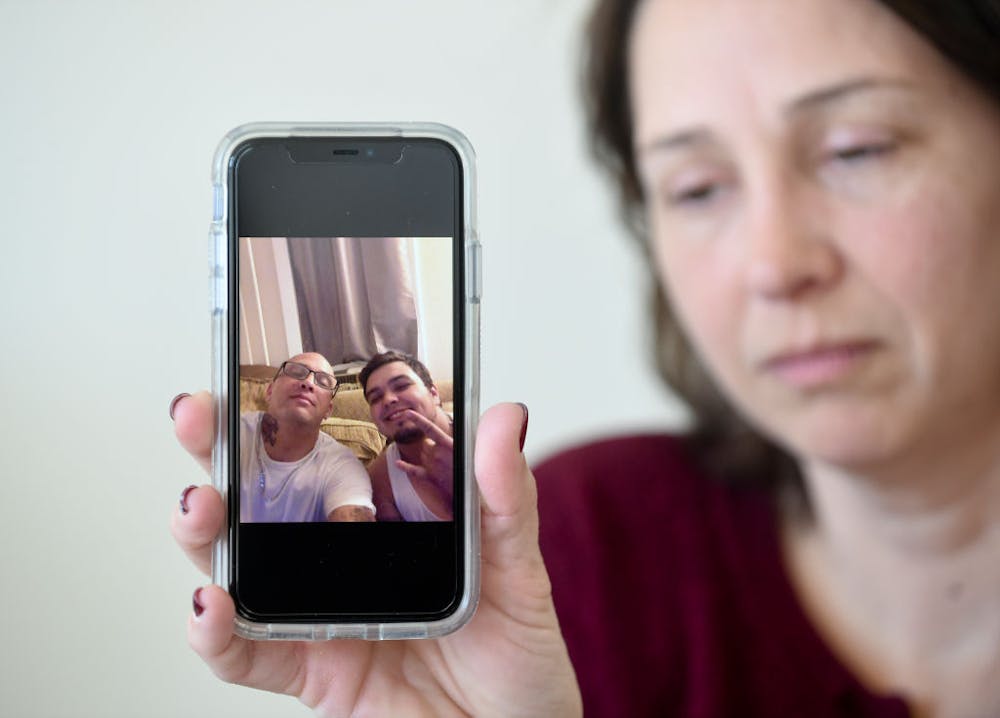
Laurie Restivo’s brother, David Restivo, 47 (left on phone image), died from fentanyl-laced heroin, and her son, Jason Fisher Jr., 25 (right), died from fentanyl-laced cocaine. Reading Eagle/MediaNews Group via Getty Images
In terms of effective treatment, medically assisted treatments are considered the gold standard for opioid use disorder, yet they are still underutilized. Buprenorphine is an opioid with a “ceiling effect,” meaning it does not intoxicate like morphine or heroin but instead satiates an opioid craving. Buprenorphine assists people in transitioning away from uncontrolled use and mitigates physical cravings. People who are prescribed it are often able to work, attend therapy and regain enjoyment of day-to-day life.
Nonetheless, buprenorphine’s availability varies widely by state, and people of color are persistently underprescribed this lifesaving medication. Methadone has been used as a treatment for opioid use disorder since the 1950s, yet it is persistently hard to access long term. Researchers point to the ongoing role of stigma in the underuse of both of these medications.
Public health officials, harm reduction activists and concerned citizens across the U.S. are working to secure safer injection sites where people can use drugs in the presence of medical staff. Such sites facilitate the prevention of fatal overdose by assuring an adequate and timely medical response and open a pathway for further health care and addiction-related treatment. In response to the pandemic’s strains on inpatient care facilities, take-home methadone availability was expanded in new ways – a change that some treatment experts hope will be permanent.
For people who use drugs, the potency and contents of their drugs are often unknown. Drug-checking programs allow people to inspect the contents of their drugs for fentanyl at home with a simple test strip. Such programs have recently gained traction with federal support. States also continue to expand access to naloxone, an overdose reversal nasal spray that is simple to administer. People who use drugs or have loved ones who use drugs are encouraged to receive training on how to administer naloxone and to carry the nasal spray on them.
Those who argue for a safer supply and decriminalization of drugs point to success abroad. Heroin-assisted treatment is shown to be effective in keeping people away from an unpredictable drug market, thus lowering the risk of overdose. Germany’s use of heroin-assisted treatment improved patients’ physical and mental health while dramatically reducing illicit drug use. In the early 2000s, Portugal decriminalized all drugs in response to consistently having the highest fatal overdose rates in Western Europe. With diversion of funds away from prohibition to education and treatment, Portugal saw a drop in overall drug use and now boasts among the lowest fatal overdose rates in Western Europe.
Americans are the world’s largest consumers of drugs and consistently have among the highest rates of opioid and cocaine dependence globally. In my own research, I’ve found that people often describe drug use as a battle between sobriety and death. But the heartbreaking surge in accidental, fatal overdose deaths tells a much more complex story. Ignoring the evidence will surely cost many more lives.
If you or someone you care about has a substance use disorder and wants help, you can call SAMHSA’s National Helpline: 1-800-662-HELP (4357). Immediate emotional support is available from the National Suicide Prevention Hotline 800-273-8255.
[Get our best science, health and technology stories. Sign up for The Conversation’s science newsletter.]
Emily B. Campbell, Visiting Assistant Professor of Sociology, College of the Holy Cross
This article is republished from The Conversation under a Creative Commons license. Read the original article.
In The News
>WEATHER: Mark Rosenthal's 7-day forecast (:34). High of 70 today in Worcester
-Mass. could see warmer, wetter winter, National Weather Service says
>TOP OF THE NEWS
+Noon: How Worcester residents can sign up for 2027 health plans
+Noon: Gov. Healey sets 60% school breakfast goal; Worcester schools averaged 37.6%
+Noon: Early voting update: Nearly 10,000 ballots cast so far in Worcester
+Noon: Worcester man's Halloween display raises money for charity (2:57)
-Asbestos discovery closes Worcester Head Start facility
-Kelley Square and Mill Street were redesigned. Are they safer today?
-Worcester Human Rights Commission to review police policies, homeless encampment proposal
-Where is Aaron Pennington? Fugitive search enters third year (2:22)
-Max German of Shrewsbury a finalist in "Voice of Logan" contest
-Westborough police chief on leave following an incident in Shrewsbury (:20). Article
-Parents recall Uxbridge Officer LaPorta as community honors him
-Earlier: D.A.: Investigation into death of Uxbridge officer results in no charges
-Worcester County Wonders: The Phantom of the Palladium
-In historic company: Women of Worcester's past, present honored in new mural
-College closures derail students’ plans, leaving some unsure when they’ll return
>DINING OUT: Avvio Ristorante wins early buzz with home-made pasta and tasty pizzas
-Large audience, low price: Give your restaurant's social media a boost on The 016
-Phantom Gourmet visits Worcester restaurant (5:02)
-ICYMI: Anna Maria weighs giving interested buyers more time after auction cancellation
-Worcester Homeowner Summit set for November 7th at DCU Center
-Worcester police, D.E.A. find fentanyl in Clover Street raid
-Worcester police seize 38 guns, ghost gun frames
-See the rest of the day's Worcester news
>HOLDEN: This week's road closures and traffic delays
-Wachusett Teacher Spotlight: Brian Lux
>THE BURBS (brought to you by North End Motor Sales): Community Advocate Hometown Helper: Bernice Gero, animal advocate
-Warrant issued for man who broke into ex-girlfriend’s home in Barre while she was asleep
-Coolidge Elementary School's hidden staircase evokes Shrewsbury memories from decades past
-Meadows Montessori excited to open in Westborough
-New warehouse plans before Westborough Planning Board
-New Northborough fire chief says he has felt "truly welcomed" by town officials, community
>BARS & BANDS: The Mayor's Live Music List for Monday
>SHOWTIME: Gateway Players in Southbridge to hold auditions for "The Lifespan of a Fact"
-Dudley's first poetry slam brings community to the Fun Zone Playground wooded stage
-100 FM The Pike (20:41): Ken Casey from Dropkick Murphys on music as a force for change
>OPINION: Tommy Dorfman: Ticket prices are out of control. Gov. Healey’s bill will make them worse
-WCCA-TV's Chandler Chat No. 510 (28:21): City clerks & state election
-Radio Worcester's The Rundown reacts to W.P.D. internal investigation in Toomey case (24:59)
>OBITUARIES: Tribute to Worcester native who was a lauded poet
>SPORTS: NESN and NESN+ to broadcast select Holy Cross contests
-Railers lose to Maine, 3-1
-Radio Worcester (15:13): Worcester Railers celebrate 1,000 wins for city hockey
>NATIONAL: Christa Pike's executioners given ominous warning before botched lethal injection: court docs
-Devastated mom recalls horror of toddler being pronounced dead, before he's discovered alive in morgue
-Tragic: Nurse dies after shrimp allergy during honeymoon
>NEW ENGLAND: Sandra Birchmore's therapist back on the stand Monday (:59)
-Woman charged with manslaughter in 4-year-old daughter's fentanyl death (:22)
-Over 130 residents evacuated from Lexington nursing home (2:25)
>POLITICS: What does the Governor's Council do? Worcester candidates weigh in
-What is Mass. ballot Question 7? (8:52)
-Full debate on Mass. ballot Question 7 (29:03)
>COLLEGES: Clark campus conversation, McGovern visit examine America’s past and present
>TRAVEL (brought to you by Fuller RV & Rental): Airbnb making changes to guest cleaning requirements (1:39)
>BUSINESS: Central Mass. business by the numbers
-U.S credit card debt is on the rise. Here's how to keep yourself out of credit card debt
-Small businesses need to leverage home field advantage with S.E.O.
>SHOPPING: How inflation is hitting all parts of Halloween celebration (1:59)
>HOMES: The surprising places to never charge your phone, safety experts say
>HEALTH: "Circadian" depression may be the reason why you can't sleep
-How walking regularly can protect your brain for years to come (6:18)
>FOOD: Ina Garten reveals unique ingredient she uses in eggs
>TV/STREAMING: Trailer for "Lupin: Part 4" on Netflix (2:30)
>MOVIES: The craziest horror villains compilation (42:09)
>CELEBRITY: "Office Space" star Richard Riehle dies at 78
-Kurt Cobain's death investigation takes new turn over cop's shocking claim casting doubt on suicide
>ANIMALS: Hound gets caught breaking all her friends out of daycare (1:54)
>HISTORY: The Old Yarmouth Inn on the Cape is still going strong after 330 years
>GOOD NEWS: Veteran sees brother face-to-face for first time in 40 years
-Meanwhile, in England, escaped emu wins wrestling match in middle of road
Latest obituaries | | Sunday's Highlights | | Today's horoscope | | Local Sports
Classifieds
>HELP WANTED
+Servers, West Boylston restaurant
-Prep cook and waitstaff, Shrewsbury Street bistro
-Full-time police officer, West Boylston Police Department
-Bartenders, Worcester Restaurant Group
See all Help Wanteds | | Job opening? Post it here for FREE today
Quick Links: Personalize your news | | Browse members | | Advertise | | Blogs | | Invite friends | | Videos
Animals | | Boston Sports | | Business | | Cars | | Celebrity | | Colleges | | Commute & Travel | | Crime | | Faith | | Food | | Good News | | Health | | Help Wanted | History | | Homes | | Local Sports | | Lottery | | Movies | | National | | New England | | Politics | | Shopping & Deals | | SHOWTIME! | | TV & Streaming | | Weather

